Dental Implants in India: Cost and What to Check
The short answer.
Implants in India can cost less up front, but treatment takes months, needs follow-up, and your overseas dentist won't have your records. Check the dentist's registration and what the quote covers, and plan how you'll get aftercare at home.
Dental implants are a fixed way to replace missing teeth that looks and feels natural, and you clean them by brushing and flossing as normal. Because of the surgery and materials involved, implants can be costly up front, so some Australians consider having them in India, where fees are often lower. This guide explains the procedure, what to compare, and what to check before you book. If you’d rather explore treatment closer to home, read about dental implants at Dental Spot in Croydon.
The Dental Implant Procedure
A dental implant is a screw-like titanium post placed in your jawbone. On top of the post sits an abutment that connects the implant to an artificial crown.
Implant treatment involves recovery time, as the titanium post needs to fuse with the surrounding bone in a process called osseointegration. During the procedure, the dentist makes a small incision in the gum to expose the jawbone, prepares a small hole and places the post. After the incision is closed, you’ll need several months of healing before the abutment and crown are placed. You can read more about the stages of dental implants.
What to Consider About Implants in India
Checking the dentist
As anywhere, training, experience and the implant systems used vary between clinics. In Australia, dentists are registered with the Dental Board of Australia and must complete continuing professional development to keep their registration. Wherever you go, ask about the dentist’s registration and implant experience, the implant brand they use, and how the clinic sterilises instruments.
Your dental records
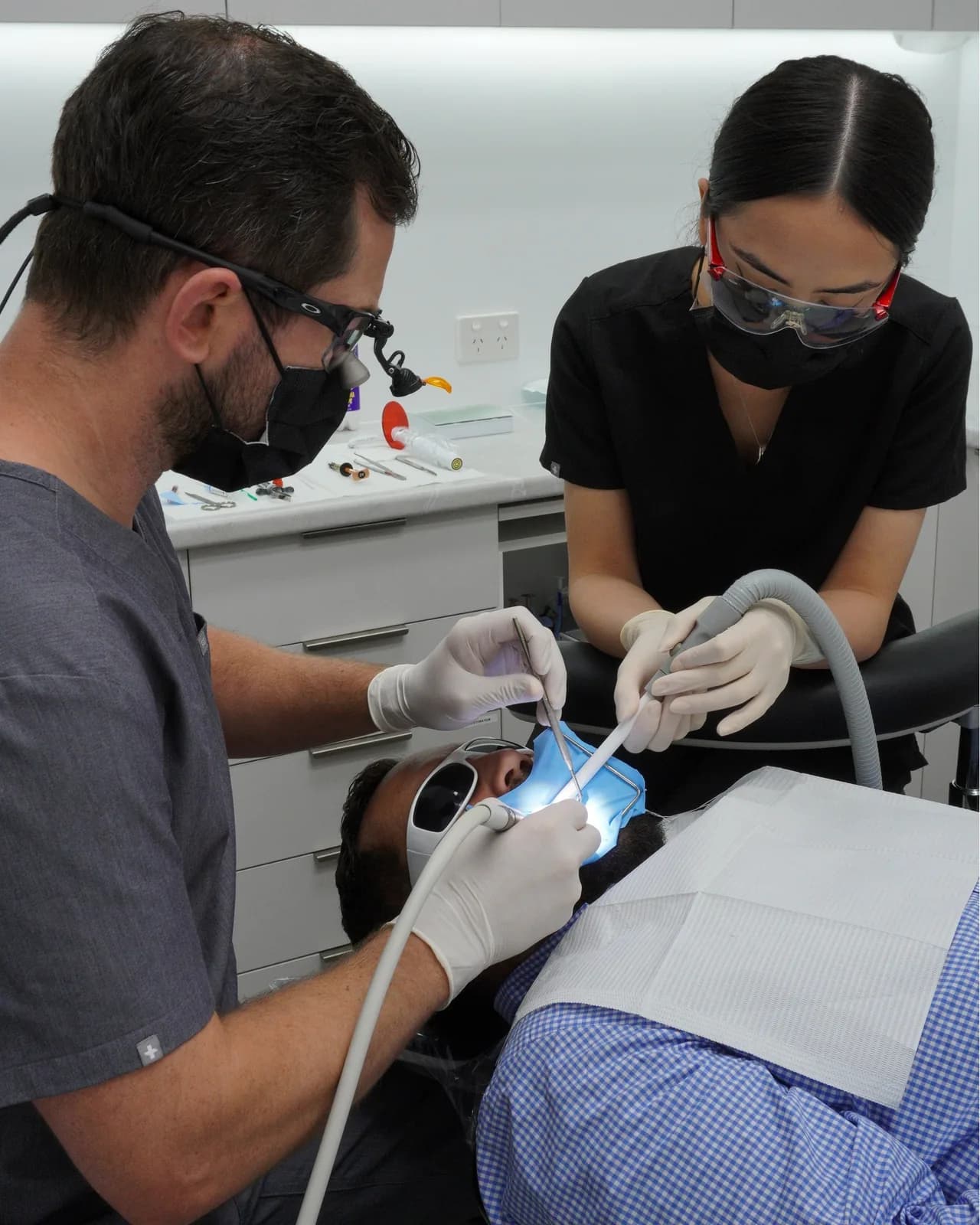
Your dentist needs your dental and medical history to plan treatment safely and avoid problems with allergies or medicines. A dentist overseas will only have the information you bring, so take your records, X-rays and a list of your medicines and allergies.
Healing and travel
Because implants need months of healing between stages, treatment overseas may mean two trips or a long stay. Long flights soon after surgery can be tiring, and you’ll need to rest and eat soft foods while you recover.
If something goes wrong
Australian private health insurance generally doesn’t cover treatment overseas, and travel insurance may not cover complications. If the implant needs attention after you’re home, you may need to pay a dentist here to treat it, and pursuing a complaint with a clinic overseas can be harder. Read more about the costs of dental implants overseas.
What the Cost Covers
Before you compare prices, check what each quote includes: the scan, the implant post, the abutment, the crown, any bone graft, and the follow-up visits. Add flights, accommodation and time off work.
In Australia, CHOICE’s guide to dental fees (updated 9 March 2023, using the Australian Dental Association’s 2022 fee survey) puts the average fee for placing one implant at $1,334 to $3,000, and for the abutment at $400 to $1,404, depending on the state. The crown is extra: the survey’s closest item, a veneered crown on a natural tooth, mostly costs $1,250 to $2,100. Scans, extractions and bone grafts add to that. These are published Australian figures, not our fees: your quote depends on your teeth, so ask us for yours.
At Dental Spot, we accept credit cards and EFTPOS, and we have HICAPS so you can claim from your health fund on the spot. Ask us for a written quote if you’d like a like-for-like comparison.
Before You Book
Smartraveller, the Australian Government’s travel advice service, notes that elective procedures can cost much less in some countries, and that while many hospitals overseas are of a similar standard to Australia’s, quality and standards in some countries can be poor. Its advice before you book treatment overseas includes:
- check that the dentist is registered with the local authority and has indemnity insurance;
- check whether your travel insurance covers complications from the treatment;
- get copies of your records to bring home.
For implants, also ask for your X-rays and the brand and size of each implant, so a dentist at home can look after them later.
Talk to Us
If you’re weighing up implants in India, we’re happy to explain what treatment here would involve and cost.
Sources
- How much does the dentist cost? (another site), CHOICE, updated 9 March 2023
- Medical tourism (another site), Smartraveller
This guide is general information, not advice about your own teeth. Your dentist can tell you what applies to you, including the risks of any treatment.
Any surgical or invasive procedure carries risks. Before proceeding, you should seek a second opinion from an appropriately qualified health practitioner.