How Does Invisalign Work? The Treatment Step by Step
The short answer.
Invisalign uses a series of custom clear trays, each shaped to the next planned position of your teeth. You switch to the next set every one to two weeks, and each one moves your teeth a small step towards their final positions.
Invisalign straightens teeth with a series of clear plastic aligners instead of brackets and wire. Here is how treatment works, step by step, if you are considering Invisalign at Dental Spot in Croydon.
What is Invisalign®?
Invisalign is an orthodontic device for correcting mild to moderate tooth misalignment. It is a series of moulded plastic trays, each custom-made to fit your teeth. It can suit patients of many ages.
Benefits of Invisalign®
Invisalign aligners have some advantages over traditional metal braces that may make them the better choice for your treatment.
Aesthetically Pleasing
Invisalign aligners are made from clear, thin, flexible plastic, so they are hard to notice while you wear them. Align Technology, the maker, says the material contains no BPA (another site).
A 2015 study of 100 patients (another site) aged 11 to 62 found that people treated with Invisalign reported greater satisfaction, and had healthier gums, than people treated with fixed braces.
Comfortable
Invisalign aligners have no brackets or wires to rub against your cheeks and gums.
Removable
You take the aligners out to eat, so you don’t have to avoid the foods braces can damage. Brush and floss your teeth before you put them back in, and rinse the aligners in lukewarm water. Because you move to a fresh set every week or two, the aligners in your mouth are never more than a couple of weeks old.
How Does Invisalign® Work?
Invisalign moves teeth the same way braces do, with gentle, steady pressure. Instead of your dentist adjusting a wire, you change to the next aligner in the series every one to two weeks. Each aligner is shaped to the next planned position of your teeth, so wearing it presses them a small step along the plan. Align’s planning typically limits each step to about 0.25 mm of movement per aligner (another site).
Some treatments also need attachments (another site): small bumps of tooth-coloured composite bonded to some teeth. They give the aligners something to grip and push against, so the teeth move in the planned direction. Attachments on the front teeth can be visible up close. Your dentist polishes them off at the end of treatment.
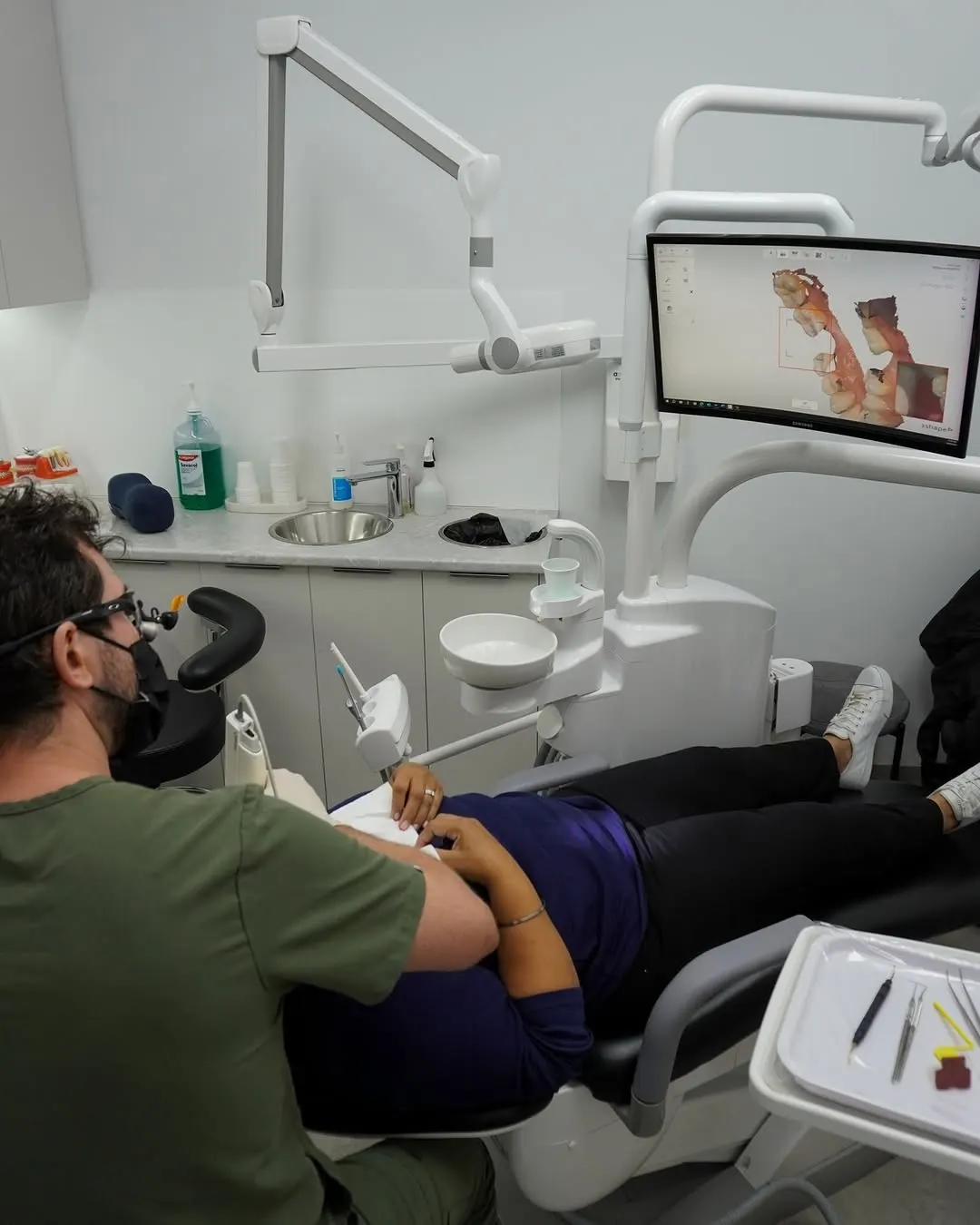
To make your aligners, your dentist scans your teeth in 3D and plans each tooth’s movement in Align’s planning software, which shows how your teeth are expected to move from the start of treatment to the end. The aligners are then made from that plan.
At the next appointment, your dentist checks the fit of your first aligners and bonds any attachments your plan needs.
Wear your aligners for 20 to 22 hours a day. Take them out only to eat, drink anything other than water, and brush and floss.
What to Expect
Simple
There are no wires to tighten. You change aligners every one to two weeks, as your dentist recommends. Speech can feel different for the first day or two with a new aligner, and this passes as your mouth gets used to it. You will still see your dentist for progress checks, usually every 6 to 8 weeks.
What it can treat
Invisalign is used to correct a range of mild to moderate misalignment problems, such as crowding, gaps and some bite problems. Your dentist will tell you whether it suits your case.
How long it takes
Treatment time depends on how far your teeth need to move. Many cases take 12 to 18 months, and your dentist gives you an estimate once your plan is made.
After Invisalign®
Once your teeth reach their planned positions, your dentist will recommend retainers to stop them drifting back. Vivera retainers are made with the same technology as Invisalign aligners, from a scan of your teeth, so they fit closely and hold your teeth in line.
Invisalign: clear aligners used to straighten teeth. This product is not available for purchase by the general public.
Vivera: retainers that hold teeth in place after straightening. This product is not available for purchase by the general public.
This guide is general information, not advice about your own teeth. Your dentist can tell you what applies to you, including the risks of any treatment.