How to Fix Discoloured Teeth
The short answer.
It depends on the cause of the stain. Professional whitening can lift many stains, while deeper ones may need veneers, a crown, bonding or tooth-coloured fillings. Your dentist explains the options, their risks and what is realistic for you.
Tooth discolouration occurs for a variety of reasons and makes you self-conscious about your smile. Whether due to age, consuming pigmented food and drinks, smoking, medications, or other dental work, tooth discolouration can occur over time, forcing you to hide your smile when you laugh and talk.
At Dental Spot, our team can talk you through cosmetic dentistry treatments such as professional whitening and veneers. Learn more about how to fix discoloured teeth and achieve a brighter, whiter smile.
Dental Veneers
Dental veneers are an excellent cosmetic solution for improving your smile, especially if you have intrinsic stains, like those from medication or deep amalgam fillings that cannot be whitened with a teeth whitening treatment. Dental veneers also mask several flaws at once and are commonly used on the social six front teeth to disguise a minor gap, worn, short, crooked or discoloured teeth. See how they compare in veneers vs crowns.
We use porcelain dental veneers at Dental Spot because they are stain-resistant and durable. We colour match your dental veneers to the rest of your smile, and they are shaped and sized to blend in.
While dental veneers are a popular choice for treating tooth discolouration, they are an irreversible solution because your dentist shaves a small amount of enamel from your teeth to accommodate the dental veneers.
Professional Teeth Whitening
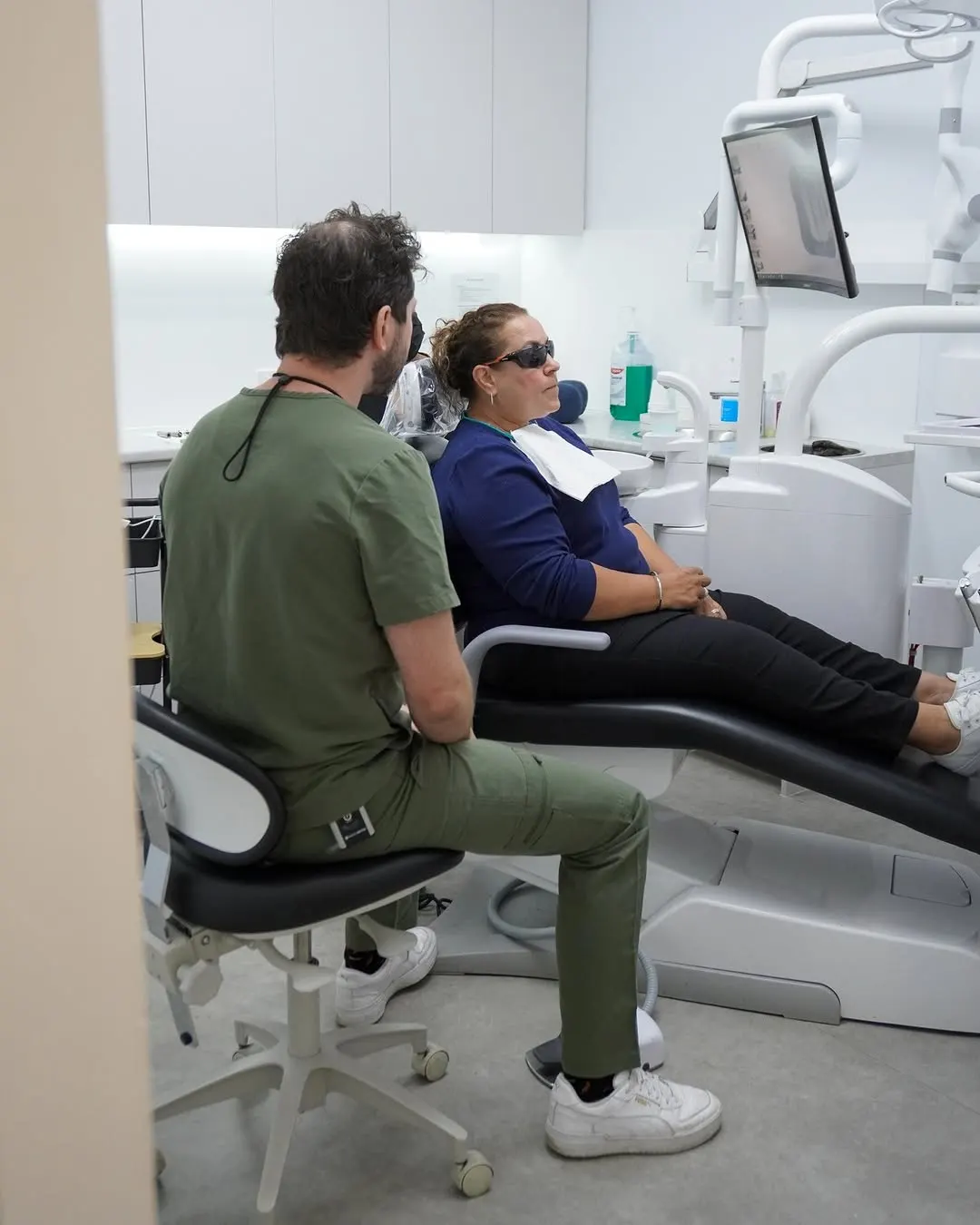
A professional teeth whitening treatment performed by your dentist can dramatically transform your smile in less than an hour. Teeth whitening treatments can remove superficial (extrinsic) stains from the surface of your teeth. Teeth whitening does not work on restorations and typically cannot brighten teeth with intrinsic stains.
After cleaning your teeth and prepping your mouth to protect your gums and soft tissues, your dentist paints a high-strength whitening agent on your teeth. After 15 minutes, it is rinsed off and repeated twice more to help you achieve your desired level of brightness which is several shades lighter.
Because your teeth are porous (another site), they can stain again, so try to limit your consumption of dark foods and drinks. Our take-home kit is ideal for making touch-ups if tooth discolouration occurs.
If you prefer to whiten your teeth in the convenience of your own home, we also offer a take-home kit that uses a dentist-supervised whitening gel and custom whitening trays. The whitening agent is stronger than over-the-counter whitening products but not as potent as the in-chair option, so it takes about 14 days for you to see noticeable results.
You will have an appointment to take an impression of your mouth to fabricate your whitening trays. Your dentist provides you with instructions on using the gel and how long you should wear your whitening trays. You can choose to wear them for a few hours a day or overnight while you sleep.
Dental Crowns
A dental crown is ideal for fixing a discoloured tooth, especially if it is toward the front of your mouth and you have a big smile. If, for example, you had a lot of dental work performed on a tooth or intrinsic stains from antibiotics (another site), you may want to mask the colour. A dental crown is a cap that is placed over your entire tooth structure to restore its appearance and function.
At Dental Spot, our on-site lab makes your customised dental crown, usually over two visits: one to prepare and scan the tooth, and one to fit the crown. We match your dental crown to the rest of your natural teeth, so if you also have teeth whitening treatment, we suggest you have it performed first.
Dental Bonding
Dental bonding is a non-invasive and quick solution for whitening an area on the tooth’s surface. The surface of your tooth is prepped so the composite resin can adhere to the surface. Your dentist paints it onto your tooth before shaping it and then curing it with a UV light. It is then polished so it matches the rest of your tooth.
Tooth-Coloured Fillings
Old or deep amalgam fillings can sometimes be visible from the outside of a tooth, making it appear grey. An easy solution for this type of tooth discolouration is to replace your silver fillings with tooth-coloured composite resin to eliminate the stain and enhance your smile.
Talk to Us
If your teeth are discoloured and it bothers you, we can talk you through the options above, their risks and what results are realistic for you.
This guide is general information, not advice about your own teeth. Your dentist can tell you what applies to you, including the risks of any treatment.