
Composite bondingin Croydon.
A chipped edge or a small gap between your front teeth can often be fixed in one visit, with tooth-coloured resin shaped onto the tooth. We’ll also tell you when straightening, whitening or leaving it alone would suit you better.
Results vary from person to person. Read the risks below before you decide.
Open Monday to Saturday
The short answer.
- What it is
- Tooth-coloured composite resin, shaped onto the tooth and hardened with a light.
- Visits
- Usually one, about 30 to 60 minutes a tooth.
- How long it lasts
- About 3 to 10 years before it needs touching up or replacing.
- Can it be undone
- Usually. Little or no enamel is removed to place it.
- What it costs
- Priced per tooth, once your dentist has planned it. Ask us for a quote.
What bonding
is.
Bonding is a tooth-coloured resin material used to repair chipped teeth, close minor gaps, or reshape teeth. It can also hide deep discolouration on a tooth. The resin is composite, the material in a white filling, and your dentist matches its shade to your teeth.
Bonding ranges from a small build-up on a chipped edge to covering the whole front of a tooth, which is called a composite veneer. The more of the tooth it covers, the more it can stain, chip or change how your teeth meet. Before you start, ask which teeth will be bonded and how much of each one will be covered.
Before and after.
Before and after treatment at Dental Spot.
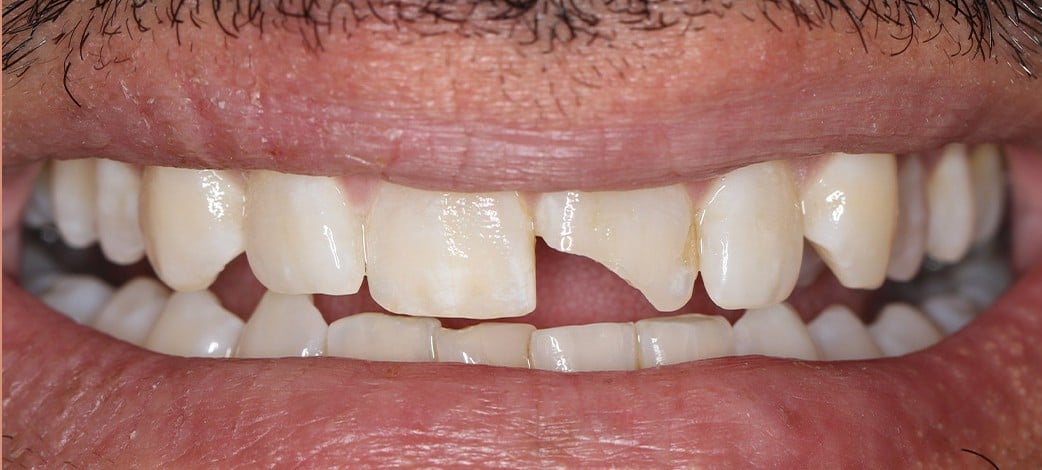
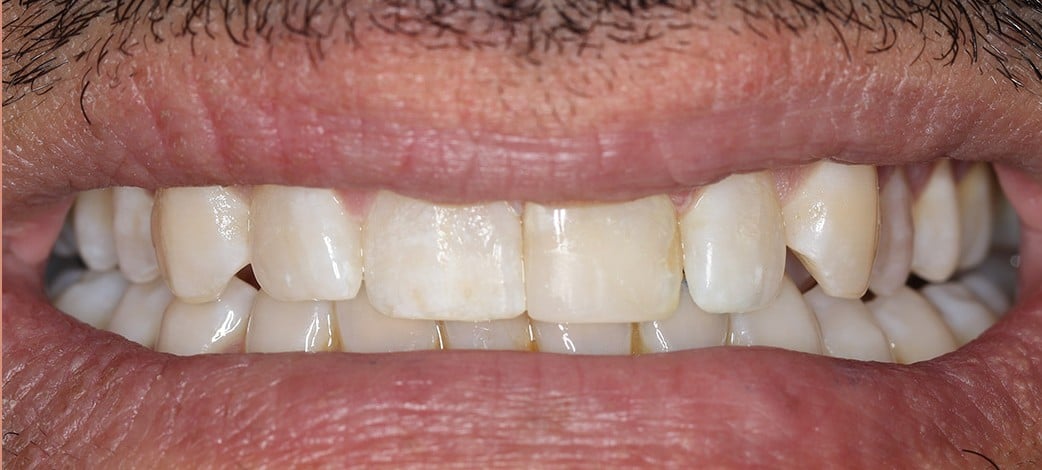
Individual results vary. Your dentist can discuss what’s appropriate for you.
View the galleryCould bonding
suit you?
Bonding suits small changes to healthy teeth, so we check your teeth and gums first and treat any decay or gum disease before cosmetic work.
A chipped or worn front tooth.
Small chips and uneven edges can be built back up. If it hurts, has a sharp edge or shows pink inside, see our emergency advice first.
A small gap between your front teeth.
Bonding can close minor gaps. Larger gaps or crowding are often better treated by moving the teeth with braces or clear aligners. We talk through bonding against clear aligners with you, and we’ll tell you if straightening suits you better.
A tooth that’s shorter, narrower or a different shape.
Bonding can reshape a tooth or make it look longer.
You’d like your teeth lighter too.
Whiten first, because whitening won’t lighten the composite later. Teeth whitening
You grind your teeth, or bite nails or pens.
Composite chips more easily than your own tooth, so your dentist may suggest a night guard or a stronger option.
How bonding is done.
Usually in one appointment, at about 30 to 60 minutes a tooth. Your dentist may split several teeth across visits.
We check and plan.
Your teeth and gums, what you’d like to change, how much of each tooth to cover, the alternatives and the cost. You decide after that, not in the chair.We match and prepare.
Your dentist chooses a shade, lightly roughens the surface and applies a bonding liquid. Numbing often isn’t needed unless the tooth has decay.We shape and set.
The composite goes on in layers, shaped by hand, and a curing light hardens each one.We polish and check your bite.
Your dentist trims and polishes it, then checks how your teeth meet before you leave.
Bonding, veneer, crown or straightening?
Bonding suits small changes. For bigger ones, a porcelain veneer lasts longer and resists stains, a crown protects a badly broken or heavily filled tooth, and straightening moves your own teeth. In a 10-year study of 1,459 veneers in one practice in Brazil, about two in three composite veneers were still in place, against about nine in ten porcelain ones (Mazzetti and others, Dental Materials, 2022).
| Option | Suits | Tooth removed | Visits | Typical life | Can it be undone |
|---|---|---|---|---|---|
| Bonding (composite) | Small chips, gaps and shape | Little or none | Usually one | About 3 to 10 years | Usually |
| Porcelain veneer | Shape and colour of the front of the tooth | A thin layer of enamel | At least two | About 10 to 20 years | No |
| Crown | Broken, heavily filled or root-filled teeth | More than a veneer | Two or more | Many years | No |
| Braces or clear aligners | Gaps and crowding, by moving teeth | Usually none; sometimes a sliver between teeth | Many, over months | As long as you wear your retainers | Mostly: teeth can be moved again |
What bonding costs.
Bonding is priced per tooth, depending on how much of each is covered.
Fees depend on the treatment you need, so we give you an accurate quote at your consultation, before anything starts.
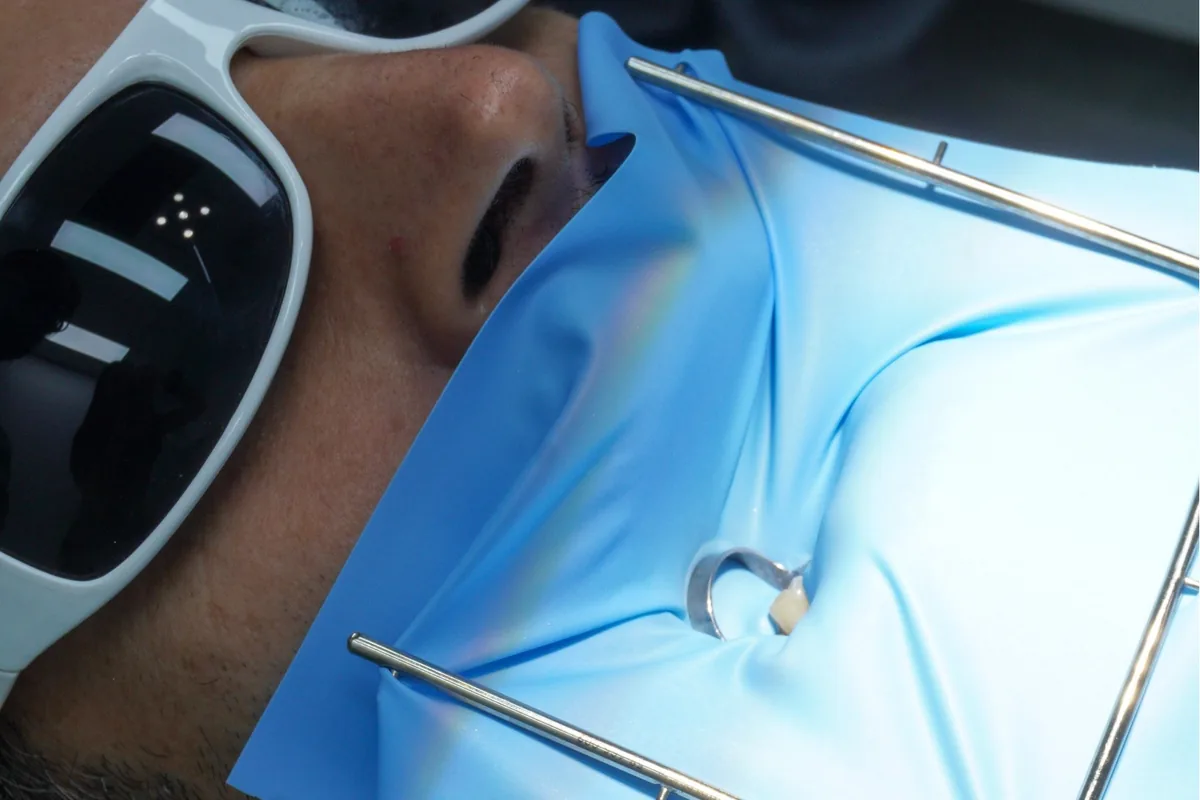
What changes the price.
- How many teeth.
- How much of each tooth is covered: an edge, or the whole front.
- Treatment needed first, like fillings or a clean.
- Whitening first, if you want lighter teeth.
- A night guard, if you grind.
- Touch-ups and replacement later.
Health funds and claiming.
Medicare doesn’t cover cosmetic dental treatment, and the Child Dental Benefits Schedule excludes it. Extras policies pay by item number, and funds differ: some count item 526 as major dental, with a waiting period, and the smaller items (521 to 525, 578 and 579) as general dental. Ask your fund using the item numbers on your written quote, and claim on the spot with HICAPS.
Costs and health fundsRisks and recovery.
Like any dental treatment, this carries risks, and results vary from person to person. Read the risks below and ask us about your situation before you decide.
What can go wrong.
Chips and breaks.
Composite isn’t as strong as your own tooth or porcelain, and fracture is the most common reason it fails on front teeth, more so if you grind or bite hard things.
Staining and colour change.
Composite stains from coffee, tea, red wine and smoking more than porcelain does, and its colour can change with age. Polishing at check-ups helps.
It needs upkeep.
Polishing, repairs and, in time, replacing it.
Bulk or a changed bite.
Too much composite can feel thick, catch floss or stop your teeth meeting properly. Tell us and we’ll adjust it.
Removal takes a little enamel.
Bonding can usually be taken off, but some enamel comes away with it.
Recovery.
Back to your day straight away.
Sensitive teeth for a few days.
Skip coffee, tea, red wine and other dark food and drink for 48 hours.
Tell us if it feels high or rough.
Your dentist can smooth a sharp edge or adjust your bite.
Brush twice a day, floss daily and keep up your check-ups.
Don’t bite your nails, pens or ice, or open packets with your teeth.
Who you’ll see.
Bonding is planned and done by one of our dentists.




Questions we’re
often asked.
Something else on your mind? Ask us on the phone, or leave your number and we’ll call.
Request a callbackHow long does composite bonding last?
About 3 to 10 years before it needs touching up or replacing (Cleveland Clinic, 2026). Grinding and biting hard things shorten its life.
Bonding or veneers: which is better?
It depends on the tooth. Bonding removes little or no enamel, usually takes one visit and costs less, but it stains and chips more and needs replacing sooner. Porcelain lasts longer and resists stains, but needs enamel removed for good.
How much does composite bonding cost?
It’s priced per tooth, depending on how much of each tooth is covered. Fees depend on the treatment you need, so we give you an accurate quote at your consultation, before anything starts.
Will my health fund pay for bonding?
Some extras policies pay a rebate, depending on the item numbers on your quote and whether your fund counts them as general or major dental. Medicare and the Child Dental Benefits Schedule don’t cover cosmetic treatment.
Does bonding stain?
Yes, more than porcelain, from coffee, tea, red wine and smoking. Whitening won’t lighten it, so whiten first if you want lighter teeth.
Can bonding fix a gap between my front teeth?
Small gaps, often. For larger gaps or crowding, braces or clear aligners often do better, and we’ll tell you which suits your teeth.
Does composite bonding hurt?
Numbing often isn’t needed, unless the tooth has decay. Some people have sensitive teeth for a few days afterwards.
Can bonding be repaired or removed?
Yes. Small chips can often be repaired by adding composite, so keep any piece that breaks off and book in. Your dentist can also replace or remove bonding, though removing it takes a little enamel. If a chipped tooth is sharp or hurts, see our emergency advice.
Is composite bonding worth it?
It can be, for a small chip or gap on a healthy tooth: it’s quicker and cheaper than a veneer and removes little or no enamel. For bigger changes, or heavy grinding, porcelain, a crown or straightening may last better. A small chip that doesn’t bother you doesn’t need treating.
Read more in our patient guides.
 Cosmetic and whitening
How to Fix Discoloured Teeth
It depends on the cause of the stain. Professional whitening can lift many stains, while deeper ones may need veneers, a…
Updated Cosmetic and whitening
Veneers vs Crowns: What's the Difference?
Veneers cover the front of teeth with minor cosmetic problems such as stains, chips or small gaps, and can't be undone.
Updated Cosmetic and whitening
How Does Teeth Whitening Work?
Whitening gels containing hydrogen peroxide or carbamide peroxide penetrate the enamel and break down stain molecules…
Updated