A bridge.
Fixed in place, with no clasps, and made in our lab. It needs crowns on the teeth either side.

A partial denture replaces one or more missing teeth and clips to the ones you still have. Anthony Adaimy makes yours in our lab, and our dentists, in the same building, look after the teeth it holds onto.
Open Monday to Saturday
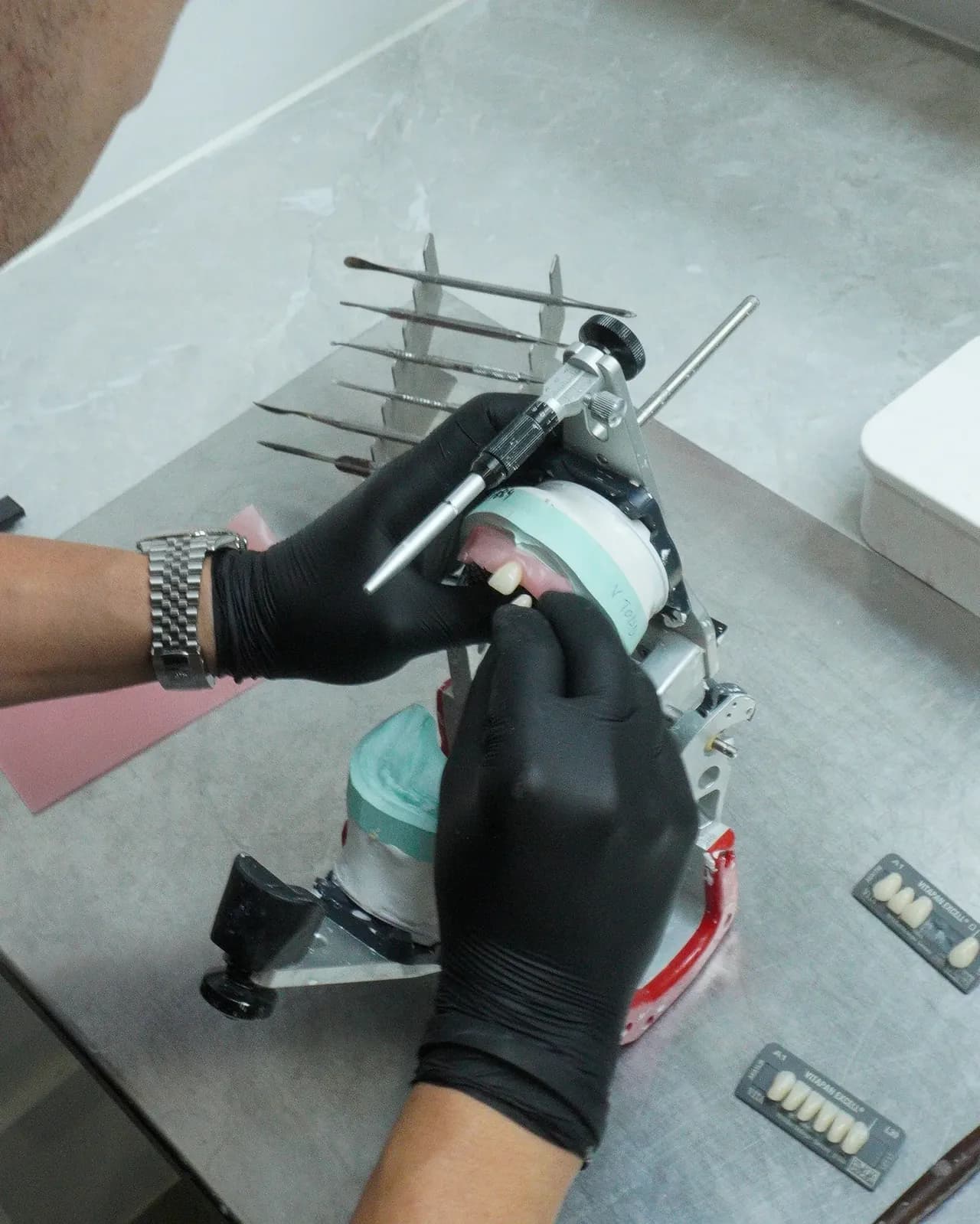
If you still have some natural teeth, a partial denture replaces the missing ones and leaves the rest in place.
It is a plate of replacement teeth, attached to your natural teeth with clasps or precision attachments, that you take out to clean.
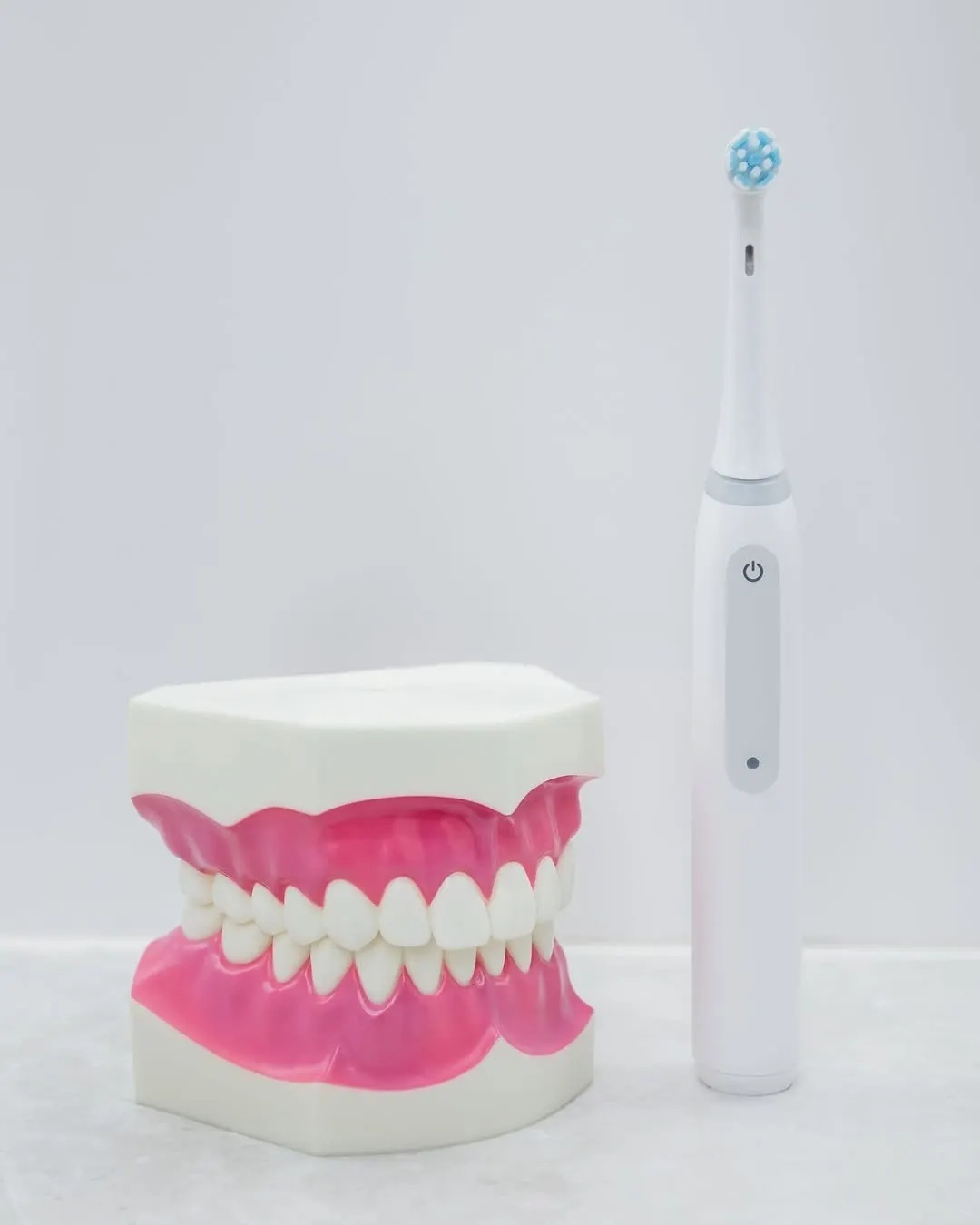
A partial fills the gap while you plan what comes next.
It starts with your teeth and gums, because a partial holds onto them and they need to be healthy first. You can book with Anthony directly.
A partial usually costs the least and needs no surgery, but it comes out, clips to your teeth, and needs relining or replacing as your mouth changes.
Fixed in place, with no clasps, and made in our lab. It needs crowns on the teeth either side.
Leaves the teeth either side alone and doesn’t come out, but involves surgery and months of healing.
Which suits you depends on how many teeth are missing, where the gaps are, and how healthy your remaining teeth and gums are. Anthony makes partials in acrylic or on a metal frame, and explains which suits your mouth. In a 2020 review of 15 studies, people were about as satisfied with acrylic as with metal, though the evidence was weak. Flexible partials are shown for comparison: the Japan Prosthodontic Society recommends them for long term use only in limited cases, because the clasps can break and the plastic can discolour.
| Acrylic (plastic) | Metal frame (cobalt chrome) | Flexible plastic | |
|---|---|---|---|
| How it’s held | Rests mostly on the gums; wire clasps grip the teeth | Rests on teeth and gums through small metal rests; the clasps are part of the frame | Flexible clasps grip the teeth; no rigid frame |
| Feel | Thicker, covering more of the palate or gums | Thinner, covering less | Thin, but can feel bulky in places |
| Looks | Wire clasps may show | Metal clasps may show on some teeth | No metal; the clasps are coloured to match the gums |
| Adding a tooth or relining | Usually straightforward | Possible, though some changes mean reworking the frame | Often difficult |
| Usual role | Often used while gums heal or other treatment is planned, or on a tight budget | Usually the long term choice, once the mouth is stable | Limited cases, such as a metal allergy |
| Median time until remade, replaced or a tooth added | Under four years (45 months) | About six years (73 months) | Not studied |
A partial is priced on its material and how many teeth it carries, and treatment your teeth need first is extra.
Fees depend on the treatment you need, so we give you an accurate quote at your consultation, before anything starts.
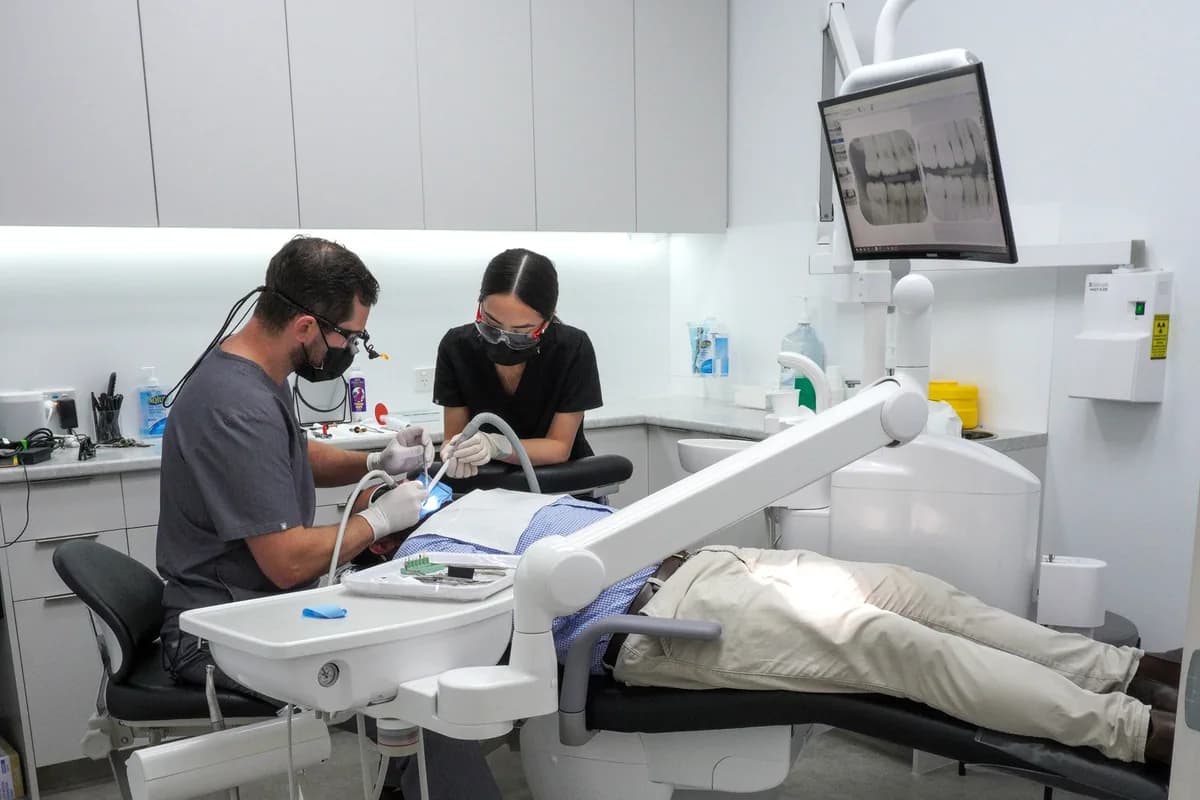
Medicare doesn’t cover dentures for most adults. Extras cover often pays part. Claim on the spot through HICAPS. We accept NSW Health vouchers, which can cover partials for adults with a concession card once public dental services have assessed them: ask us whether yours does.
Costs and health fundsLike any dental treatment, this carries risks, and results vary from person to person. Read the risks below and ask us about your situation before you decide.
Sore spots while it settles.
Decay and gum problems around the clasped teeth.
A partial can trap plaque against them, so clean them carefully.
It can loosen as your gums change.
Most often after teeth come out. A reline refits it.
It can break or wear.
Acrylic can crack if it’s dropped, and flexible clasps can wear or discolour.
Soft food, cut small, at first.
Speech can sound different.
Most people take a few months to get used to how dentures feel (healthdirect).
Out at night and to clean.
Brush your teeth with fluoride toothpaste while it’s out; clean the partial with soap or denture cleaner, not toothpaste.
Come back if anything rubs.
Or if an ulcer lasts more than two weeks.
Have the fit checked at least once a year.
Anthony, who started the practice in 2010, makes your partial here, matching the colour of the teeth and gums to yours. If a clasp needs easing or a shade looks wrong, the person who made it is in the building.
If you lose another tooth, we can usually add one to your partial, and we replace broken clasps. Minor repairs can often be done within a day.
Anthony Adaimy, dental prosthetist, makes and fits partial dentures in our lab. He isn’t a dentist: if your teeth need treatment first, one of our dentists does it, in the same building.
Something else on your mind? Ask us on the phone, or leave your number and we’ll call.
Request a callbackIt depends on the material, how many teeth it carries and any treatment your teeth need first. Fees depend on the treatment you need, so we give you an accurate quote at your consultation, before anything starts.
No rule says you must, and you can book with Anthony directly. If your teeth or gums need treatment before they can hold a partial, one of our dentists does it first.
It depends on your mouth. Acrylic costs less and is easy to add to. A metal frame is thinner and lasted longer in an Australian study. Flexible partials suit limited cases, such as a metal allergy.
Yes. A partial can replace one or more missing teeth; a bridge or an implant are the fixed options.
Sometimes. Metal clasps can show on some teeth, depending on where the gap is, so ask Anthony where each will sit before your partial is made.
Usually, yes: we add teeth to partials and replace broken clasps. Flexible partials are often hard to add to.
They can, if plaque builds up around the teeth a partial clips to. A review of 46 studies (Journal of Prosthetic Dentistry, 2024) found few gum changes, but teeth carrying clasps had about twice the odds of being taken out after five years. Careful cleaning and regular checks keep the risk down.
In a 2024 study of 1,893 partials at Griffith University’s dental clinic, metal partials lasted a median of about six years and acrylic ones under four, before being remade, replaced or having a tooth added. Regular maintenance visits helped them last longer.
Take it out at night, so your gums can rest and the partial and your teeth stay clean.
Medicare doesn’t for most adults. Extras cover often pays part, claimed on the spot through HICAPS, and we accept NSW Health vouchers, which can cover partials for concession card holders.
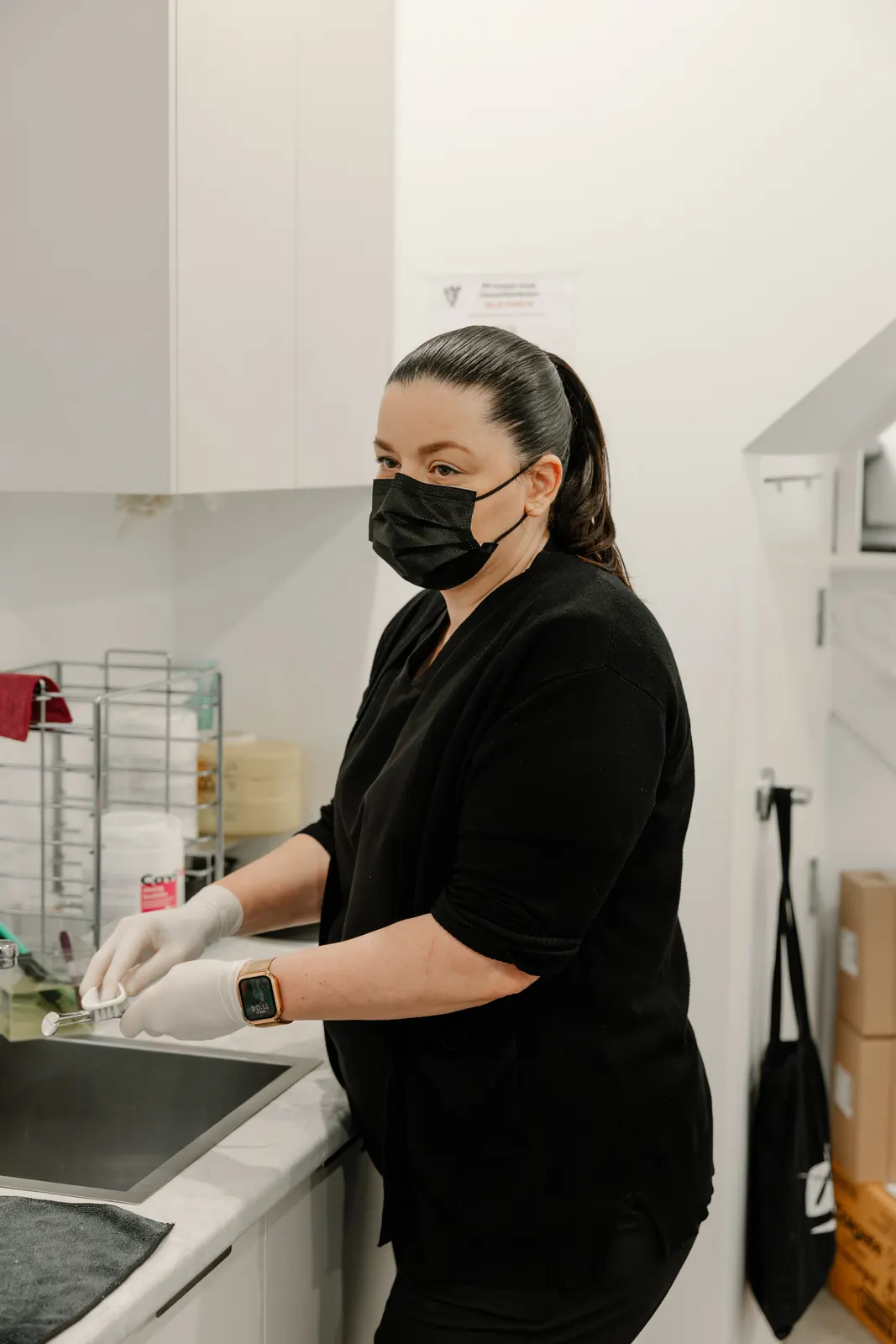 Dentures
Brush your dentures morning and night with a soft brush and denture cleaner or soap and water, not toothpaste.
Updated Dentures
That isn't our fee: ours depends on materials, extractions and appointments, so we give you an accurate quote at your…
Updated Dentures
A complete denture lasts about 10 years on average, most at least five.
Updated